
The excitement of studying abroad is undeniable, but it’s easy to overlook the practicalities of dealing with cold weather when excitement takes over! Many students find themselves unprepared for frigid temperatures, jeopardizing their health and budgets by purchasing expensive winter gear locally. However, with some research, you can find the right winter kit, stay warm, save money, and travel smartly.
The Risks of Traveling Unprepared
Traveling to a new country is already daunting, and being unprepared for the weather can be risky. Arriving in a cold climate without appropriate winter clothing can lead to many health issues, frequent flu being the most common one that hampers productivity, focus, and overall energy during winter months. Moreover, shopping locally for winter wear during peak season or emergency can cost up to four times more than purchasing a pre-prepared kit.
Temperature and Weather Considerations
When arriving in countries like the United Kingdom, USA, or Canada in September, temperatures can be quite a shock. For instance:
- UK: September temperatures range from 10°C to 20°C, but with windchill, it feels much colder.
- USA: In the northern states, September can bring temperatures as low as 5°C, with significant windchill.
- Canada: Temperatures can dip to 0°C, and windchill can make it feel even colder.
Understanding the Importance of Layering
A common misconception is underestimating the power of layering. Proper layering not only keeps you warm but also allows you to adapt to changing temperatures throughout the day. Recently, a student in London shared, “When I first arrived, I thought a single heavy coat would be enough. Thanks to the weather in the UK, I quickly learned that layering is key. With the right layers, I could stay warm without feeling bulky, and I could adjust easily when moving between the cold outdoors and warm indoor spaces.
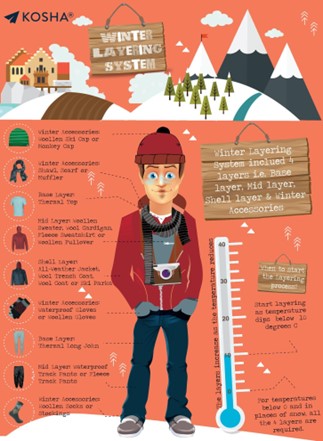
How to layer, right?
For students coming from warmer climates like India, where temperatures are often above 30°C, proper layering is crucial.
- Start with a thermal base layer (thermal top and pants),
- Add layers like a quick dry sweatshirt on very cold days,
- Top it off with a water-repellent puffer jacket in case the weather decides to confuse you with some drizzle),
- Put on a thick but super comfy jogger,
- Accessories like beanie caps, woolen gloves, and scarves are also essential to protect against windchill,
- SOCKS! How could we forget SOCK? Warm feet mean a warm body, think of socks as the unsung heroes of your winter.
Here’s a solution for you, Study Abroad Winter Kits by Kosha
The Study Abroad Winter Kits provide a complete solution to combat these challenges. Kosha is an Indian brand developed after thorough research. Providing excellent quality at half the price of international brands, Kosha’s founder, Yuktie (see her in the snow, above 🙂 ) says, “We are truly successful in debunking the myth that Indian brands can’t offer adequate winter protection.”
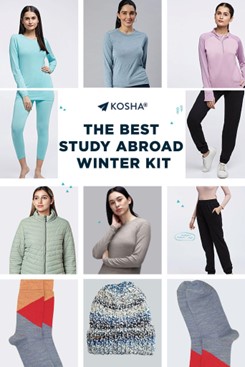
Why Choose Kosha’s Study Abroad Winter Kits?
- Complete Winter Wear Solution: The kits include all essential items for winter layering.
- Student-Friendly Pricing: The kits offer a cost-effective solution.
- Premium Quality: Made from top-quality materials like Merino Wool and Bamboo blends, ensuring lasting comfort and warmth.
- Super lightweight, A Kosha puffer jacket weighs just 420g.
Check out Kosha’s Study Abroad Winter Kits here.
The best part is that this kit doesn’t restrict mobility. The thermals, sweatshirts, and puffer jackets are designed to keep you warm without feeling bulky. You can easily move your shoulders, and the jacket’s double-sided zipper ensures you can sit comfortably too.
Prepare, Stay Warm, and Save
In conclusion, preparing for winter weather abroad is crucial. By investing in a Study Abroad Winter Kit from a trusted Indian brand like Kosha, you can ensure you have the right gear to get that warmth away from home!
_______________________________________________________________
You can also check some of their best-selling layers:
Softest Merino wool thermals | Quick-dry running t-shirt | Lightest Parka Jacket | Comfy joggers | Merino wool socks | Warm Beanie caps | Touch-enabled gloves